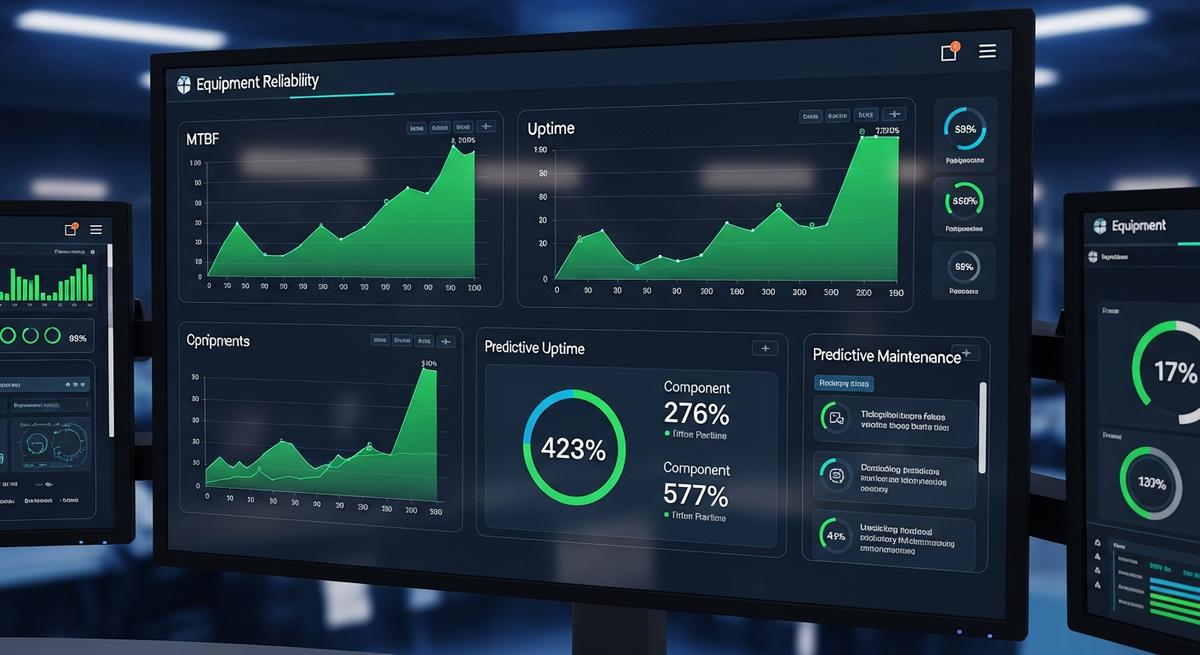
Mean Time Before Failure, commonly known as MTBF, is one of the most important metrics in equipment reliability engineering. Understanding MTBF helps maintenance managers predict equipment behavior, plan maintenance activities, and make informed decisions about repair versus replacement. For operations that depend on forklifts, cranes, and other industrial equipment, MTBF directly impacts productivity, safety, and profitability.
What is Mean Time Before Failure?
Mean Time Before Failure (MTBF) is a reliability metric that measures the average time between equipment failures for repairable systems. It represents the expected length of time a piece of equipment will operate before experiencing a failure that requires repair or intervention. MTBF is expressed in hours and provides a standardized way to compare reliability across different equipment types and manufacturers.
Important distinction: MTBF applies to repairable systems (like forklifts) while MTTF (Mean Time To Failure) applies to non-repairable items (like light bulbs). For industrial equipment that gets repaired and returned to service, MTBF is the appropriate metric.
How to Calculate MTBF
The basic MTBF calculation is straightforward: divide total operating time by the number of failures during that period.
MTBF Formula
MTBF = Total Operating Hours / Number of Failures
Example Calculation
Consider a fleet of 10 forklifts that operated for a total of 20,000 hours over one year. During that period, there were 8 failures requiring repair. The MTBF would be: 20,000 hours / 8 failures = 2,500 hours MTBF. This means you can expect an average of one failure every 2,500 operating hours across your fleet.
Important Considerations for Accurate MTBF
- Only count actual operating hours, not calendar time or idle time
- Define what constitutes a "failure" consistently (unplanned stops that require repair)
- Exclude scheduled maintenance from failure counts
- Track data over sufficient time periods to get statistically meaningful results
- Consider calculating MTBF by equipment type, age, or application for more actionable insights
Why MTBF Matters for Your Operation
MTBF is more than an academic metric. It has practical applications that directly impact your operational efficiency and costs.
Maintenance Planning
Knowing your MTBF helps schedule preventive maintenance at optimal intervals. If your forklifts have an MTBF of 2,000 hours, scheduling inspections and service every 400 to 500 hours gives you multiple opportunities to catch developing issues before they cause failures.
Spare Parts Inventory
MTBF data helps determine appropriate spare parts stocking levels. If you know certain components fail predictably, you can ensure critical spares are available when needed without overstocking items that rarely fail.
Fleet Sizing Decisions
Understanding equipment reliability helps determine the right fleet size. If your MTBF indicates frequent failures, you may need additional equipment to maintain operational capacity during repairs. Improving MTBF can reduce the fleet size needed to meet production requirements.
Equipment Replacement Timing
MTBF typically decreases as equipment ages. Tracking this trend helps identify the optimal replacement point where continuing to repair becomes more expensive than investing in new equipment. This data supports capital planning and budgeting decisions.
MTBF Benchmarks for Industrial Equipment
While MTBF varies significantly based on equipment type, application, and maintenance practices, understanding typical ranges helps set realistic goals.
Forklift MTBF Ranges
- Electric forklifts (well-maintained): 2,500 to 4,000 hours
- Electric forklifts (average maintenance): 1,500 to 2,500 hours
- IC forklifts (well-maintained): 2,000 to 3,500 hours
- IC forklifts (average maintenance): 1,200 to 2,000 hours
- Warehouse conditions typically yield higher MTBF than outdoor or harsh environments
These benchmarks are general guidelines. Your actual MTBF will depend on equipment age, operating conditions, maintenance quality, and operator care. Track your own data to establish meaningful targets for your specific operation.
Related Reliability Metrics
MTBF works alongside other metrics to provide a complete picture of equipment reliability and maintenance effectiveness.
MTTR (Mean Time To Repair)
MTTR measures the average time required to repair equipment after a failure. Combined with MTBF, you can calculate equipment availability. Lower MTTR means faster return to service after failures occur.
Availability Calculation
Availability = MTBF / (MTBF + MTTR). For example, if MTBF is 2,000 hours and MTTR is 8 hours, availability is 2,000 / 2,008 = 99.6%. This means the equipment is expected to be operational 99.6% of the time.
Failure Rate
Failure rate is the inverse of MTBF (1/MTBF) and represents the probability of failure per unit time. This is useful for risk calculations and reliability modeling. An MTBF of 2,000 hours equals a failure rate of 0.0005 failures per hour.
Strategies to Improve MTBF
Improving MTBF requires addressing the root causes of equipment failures through better maintenance practices, operator training, and equipment management.
Implement Rigorous Daily Inspections
Daily pre-operational inspections catch developing problems before they cause failures. Issues like low fluid levels, worn components, and damaged parts can be identified and addressed during planned maintenance rather than causing unplanned breakdowns.
Organizations using digital inspection platforms like ForkliftTracker report 25 to 35% improvements in MTBF within the first year. Consistent inspections and rapid deficiency resolution prevent the cascade failures that drive down reliability.
Follow Manufacturer PM Schedules
Equipment manufacturers develop preventive maintenance schedules based on extensive testing and field data. Following these recommendations, including fluid changes, filter replacements, and component inspections, maximizes equipment lifespan and reliability.
Train Operators Properly
- Ensure operators understand equipment limitations and proper operating procedures
- Train on pre-operational inspection requirements and deficiency reporting
- Address aggressive operating habits that accelerate wear
- Create accountability for equipment condition in operator evaluations
- Provide refresher training when problems are identified
Use Quality Parts and Fluids
Cutting costs on replacement parts and fluids often backfires through reduced MTBF. OEM or OEM-equivalent parts designed for your specific equipment provide reliable performance. Using the correct lubricants and hydraulic fluids prevents premature component wear.
Analyze Failure Data
Track and analyze every failure to identify patterns and root causes. Are certain components failing repeatedly? Does one shift or operator have more equipment issues? Are failures concentrated in older equipment? This data drives targeted improvements that increase MTBF across your fleet.
Common Causes of Low MTBF
Understanding why MTBF falls short helps focus improvement efforts where they will have the greatest impact.
Maintenance Issues
- Skipped or delayed preventive maintenance activities
- Inadequate inspection depth or quality
- Using incorrect parts or specifications
- Insufficient technician training or experience
- Poor documentation leading to missed service intervals
Operational Factors
- Overloading equipment beyond rated capacity
- Operating in conditions equipment is not designed for
- Aggressive operation (fast starts, hard stops, rough handling)
- Extended operation without rest periods
- Failure to report developing problems
Environmental Conditions
- Extreme temperatures affecting components and fluids
- Dust, debris, or contamination in operating environment
- Moisture or corrosive atmospheres
- Uneven or damaged floor surfaces
- Inadequate charging or fueling facilities
Tracking MTBF with Digital Tools
Manual tracking of operating hours and failures across a fleet is time-consuming and error-prone. Digital equipment management platforms automate data collection and calculation, providing real-time visibility into reliability metrics.
Benefits of Digital MTBF Tracking
- Automatic hour tracking based on inspection and usage data
- Consistent failure categorization and documentation
- Real-time MTBF calculations by equipment, type, or fleet
- Trend analysis showing reliability changes over time
- Integration with maintenance scheduling and work orders
- Benchmarking across facilities or fleet segments
When inspection data, maintenance records, and failure reports are captured digitally, MTBF becomes a living metric that drives continuous improvement rather than a periodic calculation that is quickly outdated.
Using MTBF for Business Decisions
MTBF data supports several important business decisions beyond day-to-day maintenance planning.
Vendor and Equipment Selection
When evaluating new equipment purchases, request MTBF data from manufacturers and compare it to your actual fleet performance. A lower purchase price means nothing if reliability is poor. Total cost of ownership calculations should factor in expected failure rates and repair costs.
Service Contract Negotiations
Your MTBF data provides leverage in maintenance contract negotiations. If your equipment performs better than average, you may not need expensive comprehensive coverage. If MTBF is low, understanding root causes helps determine whether contract service or in-house improvements offer better value.
Capital Planning
Tracking MTBF by equipment age reveals when reliability drops to unacceptable levels. This data supports capital replacement planning, helping you budget for new equipment before existing assets become unreliable enough to impact operations.
Conclusion: Building a Reliability-Focused Culture
Mean Time Before Failure is more than a number. It reflects the quality of your maintenance program, the skill of your operators, and your organization's commitment to equipment care. Understanding what MTBF is and how to improve it provides a framework for continuous reliability improvement.
The most successful operations treat MTBF as a key performance indicator, tracking it regularly and taking action when trends move in the wrong direction. They invest in the inspection and maintenance practices that keep equipment running reliably, recognizing that uptime is the foundation of operational efficiency.
Ready to start tracking and improving your equipment MTBF? ForkliftTracker provides comprehensive inspection and maintenance tracking that captures the data you need to calculate reliability metrics, identify improvement opportunities, and demonstrate results. Start your free trial today and see how digital tools can transform your equipment reliability program.