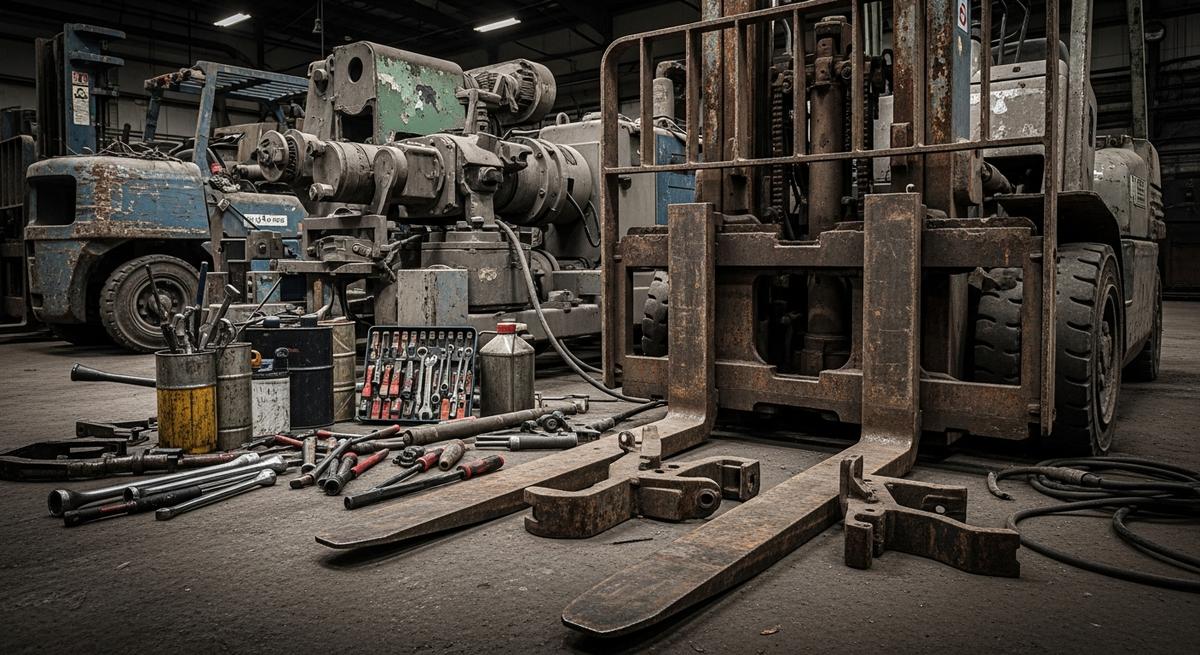
Deferred maintenance is one of the most expensive decisions an organization never consciously makes. It happens quietly, one delayed repair at a time, until suddenly you are facing equipment failures, safety incidents, and repair costs that dwarf what preventive maintenance would have required. Understanding deferred maintenance is the first step toward eliminating it from your operations.
Understanding Deferred Maintenance: A Definition
Deferred maintenance refers to the practice of postponing necessary maintenance activities, repairs, or replacements to a future period. This can include scheduled preventive maintenance that gets skipped, repairs that are delayed after issues are identified, or upgrades that are continuously pushed back due to budget constraints or operational pressures.
Industry studies show that every $1 of deferred maintenance today costs $4 to $5 in future repairs. For industrial equipment like forklifts and cranes, this multiplier can reach 10x when safety incidents are factored in.
The key characteristic of deferred maintenance is that the work is known to be necessary but is intentionally delayed. This distinguishes it from unplanned maintenance (responding to unexpected failures) or from maintenance that simply was not identified as needed.
Why Organizations Defer Maintenance
Maintenance gets deferred for many reasons, and understanding these root causes is essential for developing effective prevention strategies.
Budget Constraints and Cost Pressures
When budgets are tight, maintenance is often the first line item to get cut. Unlike production or sales activities, maintenance does not directly generate revenue, making it an easy target for cost reduction. However, this short-term thinking ignores the compounding costs of deferred work.
Operational Demands
Production schedules often take priority over maintenance schedules. When equipment is needed to meet customer orders or production targets, pulling it offline for maintenance seems counterproductive. This creates a cycle where maintenance windows keep shrinking until they disappear entirely.
Lack of Visibility
Many organizations lack the systems and data needed to understand their true maintenance requirements. Without clear visibility into equipment condition, upcoming service needs, and the consequences of delays, it becomes easy to defer work that feels optional but is actually critical.
Resource Shortages
- Insufficient maintenance staff to handle all required work
- Parts unavailability or long lead times
- Lack of specialized skills or certifications
- Tool and equipment constraints
- Competing priorities across multiple facilities or fleets
The True Cost of Deferred Maintenance
The costs of deferred maintenance extend far beyond the original repair price. Understanding these hidden costs helps build the business case for prioritizing maintenance investment.
Accelerated Equipment Degradation
When one component fails or operates suboptimally, it places additional stress on related components. A worn bearing that is not replaced causes shaft damage. A degraded hydraulic filter allows contamination that damages pumps and cylinders. Each deferred repair accelerates wear throughout the system.
Unplanned Downtime Costs
Equipment that fails unexpectedly costs far more than scheduled maintenance. Unplanned downtime includes emergency repair premiums, expedited parts shipping, production losses, missed deadlines, and potential customer penalties. For forklifts and material handling equipment, a single breakdown can halt entire production lines.
Research by the U.S. Department of Energy found that unplanned equipment failures cost 3 to 9 times more than planned maintenance activities for the same repair scope.
Safety and Compliance Risks
Deferred maintenance on safety-critical equipment creates liability exposure and regulatory risk. OSHA requires that forklifts be maintained in safe operating condition, and equipment with known defects must be removed from service. Ignoring maintenance needs can result in citations, fines, and most importantly, worker injuries.
Reduced Asset Value and Lifespan
Poorly maintained equipment depreciates faster and has lower resale value. The total cost of ownership increases significantly when equipment must be replaced prematurely due to accumulated maintenance neglect. A forklift designed for 20,000 hours of service might only reach 12,000 hours when maintenance is consistently deferred.
Measuring Your Maintenance Backlog
Before you can address deferred maintenance, you need to quantify the problem. A maintenance backlog assessment provides the foundation for prioritization and resource allocation.
Backlog Calculation Methods
- Compile all open work orders and service requests
- Include scheduled PMs that are overdue or have been skipped
- Add known equipment deficiencies from inspection reports
- Estimate labor hours required for each item
- Calculate parts and materials costs
- Categorize by priority: safety-critical, operational impact, cosmetic
Express your backlog in both labor hours and dollars. Compare your backlog to your available maintenance capacity to understand how many weeks or months of work has accumulated. A healthy organization typically maintains a backlog of 2 to 4 weeks of work. Backlogs exceeding 8 weeks indicate systemic underinvestment in maintenance.
Strategies for Eliminating Deferred Maintenance
Reducing your maintenance backlog requires a multi-pronged approach that addresses both the accumulated work and the root causes that created it.
Prioritize Safety-Critical Items
Not all deferred maintenance carries equal risk. Start by addressing items that create safety hazards or regulatory exposure. Equipment with failed safety devices, structural damage, or compromised controls must be repaired immediately or removed from service.
Build a Funded Maintenance Program
Maintenance budgets should be based on actual equipment needs, not arbitrary percentages or historical spending. Calculate the true cost of maintaining your fleet properly, including labor, parts, and contract services. Present this as an investment that protects asset value rather than an expense to be minimized.
Implement Digital Inspection Systems
Paper-based inspection programs make it easy to lose track of identified issues. Digital inspection platforms capture deficiencies at the point of discovery, automatically generate work orders, and provide visibility into equipment condition across your entire fleet.
ForkliftTracker users report 40% reduction in deferred maintenance within the first year by capturing every inspection finding digitally and tracking resolution to completion.
Schedule Dedicated Maintenance Windows
- Block equipment availability for scheduled maintenance in production planning
- Create rotating maintenance schedules that balance operational needs
- Use slow periods strategically for major maintenance projects
- Consider second or third shift maintenance when day shifts are production-focused
- Implement weekend maintenance programs for critical backlog reduction
Preventing Future Deferred Maintenance
Once you have addressed your current backlog, focus on preventing new deferrals from accumulating.
Establish Maintenance Metrics and Accountability
Track key performance indicators that reveal maintenance health. PM compliance percentage, mean time between failures, and backlog aging all provide early warning of developing problems. Share these metrics with operations leadership to maintain focus on maintenance investment.
Create Escalation Procedures
Define clear escalation paths for maintenance work that cannot be completed on schedule. When maintenance must be deferred, require documented approval from appropriate management levels based on risk. This creates visibility and accountability for deferral decisions.
Invest in Predictive Capabilities
Move beyond time-based maintenance to condition-based approaches where possible. Regular inspections that capture equipment condition data enable you to address issues while they are still minor and inexpensive to fix. Trending this data over time helps predict failures before they occur.
The Business Case for Maintenance Investment
Presenting maintenance as a strategic investment rather than a cost center helps secure the resources needed to eliminate deferrals.
ROI Calculation Framework
- Avoided emergency repair costs (3-5x planned maintenance cost)
- Reduced unplanned downtime (production value per hour x hours saved)
- Extended equipment life (avoided capital replacement costs)
- Lower parts costs (preventive replacement vs. cascade failure)
- Reduced safety incident costs (workers comp, OSHA fines, liability)
- Improved equipment resale value
Most organizations find that properly funded maintenance programs deliver 3:1 to 5:1 returns on investment when these factors are calculated comprehensively.
Conclusion: Breaking the Deferred Maintenance Cycle
Deferred maintenance is a choice, even when it does not feel like one. Every skipped PM, every delayed repair, and every ignored inspection finding adds to a debt that must eventually be paid, usually at a significant premium. Understanding what deferred maintenance is and how it accumulates is the first step toward building maintenance programs that protect your equipment, your workers, and your bottom line.
The most effective organizations treat maintenance as a core operational function, not an afterthought. They invest in the systems, resources, and culture needed to keep equipment in optimal condition throughout its service life. The result is higher equipment availability, lower total cost of ownership, and operations that run safely and efficiently.
Ready to eliminate deferred maintenance from your equipment fleet? ForkliftTracker provides the digital inspection and maintenance tracking tools you need to capture every deficiency, track every repair, and ensure nothing falls through the cracks. Start your free trial today and see how much your deferred maintenance backlog is really costing you.